Background Checks for Cleaning Crews on Florida Public Contracts: What You Have to Prove Before You Bid
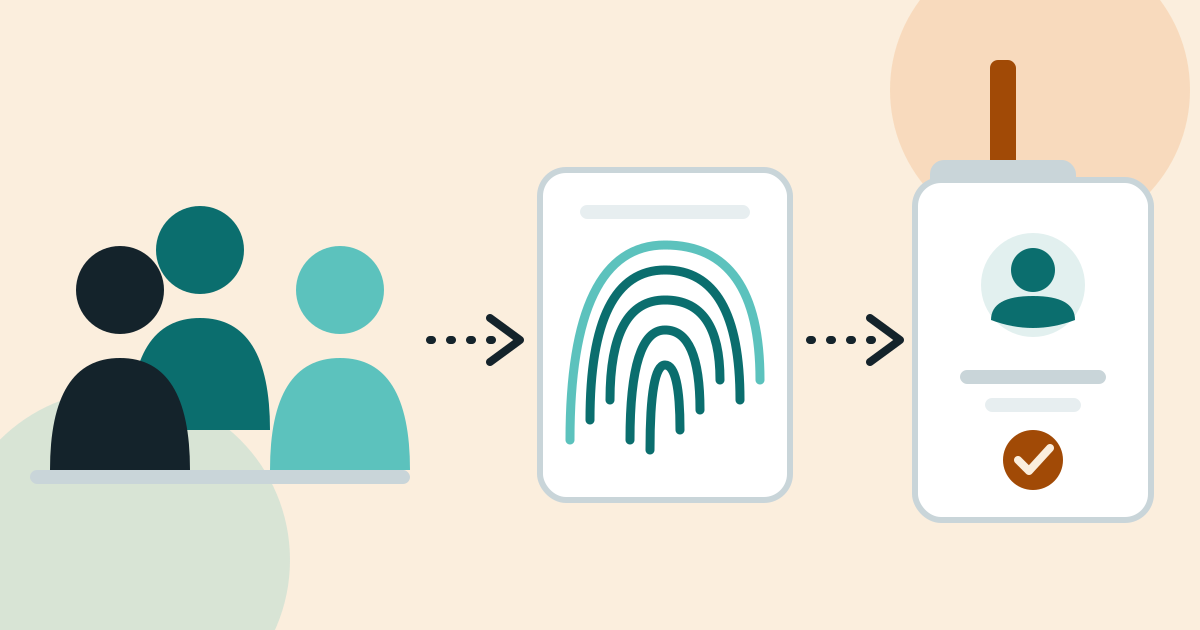
Short answer: Most public cleaning bids in Florida don't ask you to hand over background checks with your bid, but many make you promise to run them on every person you send into the building, and some buyers (school districts especially) require fingerprinting before your crew gets a badge. Separately, Florida law requires public agencies to make their contractors use E-Verify. Read the clause, price the cost in, and have a written screening routine ready before you bid.
The bid that is open right now at the Florida Department of Transportation's District 2 office is a good example. It is a janitorial contract for the Chiefland Maintenance Complex in Levy County, bids are due Monday, November 9 at 2:00 PM, and there is no pre-bid meeting. Among the requirements is that the contractor run criminal background checks on all staff, and be enrolled in E-Verify. No meeting to attend, so the thing that can trip a small company up is the line about your people.
If you're new to government work, that line is easy to skim past. Insurance gets all the attention, and I wrote about that here. But a bid can be thrown out for fine print, and I covered what that looks like in Disqualified Before You're Scored. Staff screening sits in the same bucket: cheap to handle if you plan for it, expensive if you find out after you've won.
This is owner-to-owner, so let me keep it practical. Here is what the clauses usually mean, what Florida law actually says, and what to put in place this week.
Three different things get called a "background check"
When a solicitation says "background checks," it can mean three very different things. Which one decides your cost, your timeline and your risk.
- A promise. The bid says you will screen your employees, and you sign to that. The agency doesn't look at the results. The FDOT Chiefland bid looks like this type: it asks for criminal background checks on all staff. Read the exact wording in the solicitation, because "all staff" is a promise about every person you send, not only your supervisors.
- A fingerprint check run by the buyer. The agency or school district sends your people to be fingerprinted and decides who gets a badge. This is how school districts handle contractors. You don't control the result, and you can't put someone on the job until they clear.
- A named standard. Some solicitations say "Level 2 screening." That term comes from Florida's chapter 435. Section 435.04 describes it: fingerprints submitted electronically to the Florida Department of Law Enforcement (FDLE), a national check through the FBI, a local criminal records check, and a search of sexual predator and offender registries. It applies where another law or the contract calls for it, and it comes with a list of disqualifying offenses.
The first step on any bid is to work out which of the three you are being asked to do. Then check three more details in the clause: who is covered (everyone, or only people on site more than some number of hours), when it has to happen (at bid, at award, before the first shift), and who pays.
What the law says about cleaning crews in schools
Schools are where background screening is the strictest, and they are a real market in North Central Florida. Alachua County Public Schools alone shows several cleaning-related contracts in Rebid Ready's records: hard floor cleaning, carpet cleaning, and district-wide special-team custodial work. (Contract end dates in our records run from late 2026 into 2027; confirm any date with the district's purchasing page before you plan around it.)
Florida's rule for contractors on school grounds is section 1012.467, "Noninstructional contractors who are permitted access to school grounds when students are present." A few points from the statute text:
- Who it covers. A noninstructional contractor is any vendor, individual or entity under contract with a school or school board that is paid for its work. The definition also reaches the contractor's employees and subcontractors.
- What it requires. A fingerprint-based criminal history check on each contractor who is permitted on school grounds when students are present, where the work isn't expected to bring direct contact with students and any contact would be infrequent and incidental. If your work would involve more direct contact with students, other rules can apply, so ask the district which one covers your job.
- Who pays. The statute says the cost may be borne by the school board, the school, or the contractor. Read your contract to see which.
- What disqualifies a person. The statute lists convictions that keep someone off school grounds, including sexual offender registration offenses, murder, kidnapping, lewdness and indecent exposure offenses, incest, and child abuse or neglect.
- What you owe the district after a person clears. A contractor must tell their employer and the district within 48 hours of an arrest for a disqualifying offense. The statute makes it a third-degree felony for an employer or contracting party to knowingly authorize a barred person to be on school grounds.
That last point is why I'd treat school work differently from a state office bid. The consequences of getting it wrong are not a lost bid; they are legal.
How it works in practice at Alachua County Public Schools
The School Board of Alachua County publishes its own fingerprinting procedures for contractors and vendors. The steps on that page:
- Each contractor or vendor employee is fingerprinted electronically through Fieldprint, by appointment, at one of two Gainesville locations. Appointments are made online.
- The district reviews the results under its screening guidelines and Florida statutes. If a person is cleared, the district notifies them when their ID badge is ready for pickup. If not, the person gets a letter and a copy goes to their company.
- The company must tell the district when a fingerprinted employee leaves, and the employee should return the badge to Human Resources as soon as possible.
The district's page lists $73.25 for fingerprinting plus a $10.00 state badge fee. A second district-hosted page lists $82.00 plus the same $10.00, so fees may have changed; confirm the current number when you book. For planning, here is an example of what a small crew costs:
| Fee used | Per person | Crew of 6 | Crew of 12 |
|---|---|---|---|
| $73.25 fingerprinting + $10.00 badge | $83.25 | $499.50 | $999.00 |
| $82.00 fingerprinting + $10.00 badge | $92.00 | $552.00 | $1,104.00 |
Those numbers are small next to a contract, but they are not small next to one night-shift cleaner who quits in week two. Turnover is where the cost really lives, because every replacement has to go through the process before they can work. Build one new-hire cycle per quarter into your price.
E-Verify: the part that applies to nearly every public bid
Background checks vary by buyer. E-Verify is different, because it comes from state law. Section 448.095 says a public agency may not enter into a contract unless each party to the contract registers with and uses the E-Verify system, and that a contractor must use E-Verify to verify the work authorization of all its new employees. Subcontractors have to give you an affidavit that they don't employ unauthorized workers.
The same law also requires private employers with 25 or more employees to use E-Verify as of July 1, 2023. If you are a smaller company, the public-contract rule still applies to you the moment you take a public job. The FDOT Chiefland solicitation lists E-Verify (s. 448.095) among its requirements, and the statute is also linked in the disqualification post.
Practical point: enroll before you bid, not after you win. It is a registration with a federal system, and you do not want to be doing it the week the contract starts.
What to put in place this week
You do not need a human resources department for this. You need a short written routine that you can describe in two sentences if a buyer asks.
- Write a one-page screening policy. Say who is screened (everyone who enters the client's building), when (before their first shift), what kind of check, and what you do with a result. Keep it in your bid binder.
- Screen before you schedule. Make a new hire's first shift depend on clearance. The costly mistakes in this area come from putting someone on a job "just until the paperwork clears."
- Keep a roster per contract. Names, start dates, clearance dates, badge numbers, and the day each person leaves. School districts expect you to tell them when staff leave, and you will not remember without a list.
- Collect badges. Make badge return part of your exit checklist.
- Enroll in E-Verify before the bid is due.
- Ask your subcontractors for the same. The statute puts the affidavit requirement on them, but the problem lands on you.
- Price it. Add the fingerprinting cost, an hour of time per hire, and a turnover allowance to your labor rate. If the buyer pays for checks, say so in your notes so you do not double count.
- Ask the buyer one question early. Most solicitations list a contact for questions. If the clause is unclear ("all staff," "background checks"), ask in writing before the question deadline, and keep the answer.
One more rule of thumb. Don't use a free online name search as a substitute for a fingerprint check when the contract calls for one. The school statute says fingerprint-based, and agencies mean it.
Where this connects to your bid decision
If you are deciding whether to chase a bid, screening requirements belong on your go/no-go list next to insurance and mandatory meetings. My go/no-go scorecard is a good place to add one more question: can we screen and staff this crew the way the clause requires? A job where the buyer fingerprints your crew and you have six cleaners ready to start is a very different job from one where you are hiring from scratch.
Frequently asked questions
Do I need background checks to bid on a government cleaning contract in Florida?
Not always at the moment you submit the bid, but often before you start work. Some solicitations, like the current FDOT District 2 bid for the Chiefland Maintenance Complex, require criminal background checks on all staff. School districts require fingerprinting before a contractor's employee can get a badge. Read the clause to see which applies.
What is a Level 2 background check?
It is the screening standard in section 435.04 of the Florida Statutes: fingerprints sent electronically to the Florida Department of Law Enforcement, a national FBI check, a local criminal records check, and a search of sexual predator and offender registries. It applies where a law or a contract calls for it.
Does a school district fingerprint cleaning contractors?
Yes. Florida's section 1012.467 requires a fingerprint-based criminal history check on noninstructional contractors permitted on school grounds when students are present, in the situations the statute describes. Alachua County Public Schools handles it through Fieldprint appointments and an ID badge.
Who pays for contractor fingerprinting?
It depends on the contract. For school contractors, the statute says the cost may be borne by the school board, the school or the contractor. Alachua County Public Schools publishes a fee of $73.25 plus a $10.00 badge fee on one page and $82.00 plus $10.00 on another, so confirm the current amount.
Is E-Verify required for a janitorial company that works for the government in Florida?
Yes. Section 448.095 says a public agency may not enter into a contract unless each party registers with and uses E-Verify. It also requires private employers with 25 or more employees to use E-Verify as of July 1, 2023.
Can I put someone to work before their background check comes back?
I wouldn't. For school grounds, the statute treats having a barred person on school grounds as a felony for the person and for an employer who knowingly authorizes it. Even where a contract is less strict, "just until it clears" is how a small company ends up in breach.
What happens if one of my employees is arrested after they are cleared?
For school contractors, the statute requires the person to tell their employer and the district within 48 hours of an arrest for a disqualifying offense. Put that in your employee paperwork so no one is surprised.
Do my subcontractors need to be screened too?
The school statute's definition of a contractor includes subcontractors and employees, and the E-Verify statute requires subcontractors to provide an affidavit that they don't employ unauthorized workers. Treat their people the same as yours and ask for proof.
The bottom line
Background checks on a government cleaning contract are mostly a paperwork-and-planning problem. The companies that handle them well have a one-page policy, a roster, and a price that already includes screening. The ones that struggle find out about the requirement after they win.
The FDOT Chiefland janitorial bid closes Monday, November 9. If it's a fit for your crew, read its staffing clause today. And if you want to see bids like this before the deadline, including the requirements in plain English, Rebid Ready sends a weekly digest of open and upcoming cleaning bids across Alachua, Marion, Columbia, Levy, Gilchrist, Bradford, Putnam and Union counties. The trial is free for two weeks with no card, and then it's $29 a month as a founding member.
Try Rebid Ready free for two weeks and see the cleaning bids coming up in Gainesville, Ocala and the rest of North Central Florida, with the requirements in plain English. No credit card needed. After the trial, founding members pay $29 a month.
Start my free trial— Jeff, founder of Rebid Ready
This post is general information, not legal advice. Prices and bid details come from public records, so always confirm them in the official solicitation and with the buyer.
Get new articles by email
One email each time I publish a new article. Just the articles, not the bid digest. Unsubscribe anytime.
Related: Disqualified Before You're Scored: the fine print that knocks out cleaning bids
What insurance do you need to bid on government cleaning contracts in Florida?
When Will You Get Paid on a Florida Government Cleaning Contract?
← More articles on the Rebid Ready blog
See what's in the Rebid Ready weekly digest
Sources
- Florida Statutes s. 1012.467, Noninstructional contractors who are permitted access to school grounds when students are present: who is covered, fingerprint-based check, cost, disqualifying offenses, 48-hour arrest notice, penalties.
- Florida Statutes s. 435.04, Level 2 screening standards: fingerprinting through FDLE, FBI and local checks, registry search.
- Florida Statutes s. 448.095, Employment eligibility (E-Verify): private employers with 25 or more employees from July 1, 2023, and public agency contractors.
- School Board of Alachua County, Fingerprinting Procedures for contractors and vendors: Fieldprint process, $73.25 fee plus $10.00 badge fee, badge and termination rules.
- Alachua County Public Schools, Fingerprinting for Contractors or Vendors (district-hosted page): lists $82.00 plus a $10.00 badge fee.
- FDOT District 2, Janitorial Services for Chiefland Maintenance Complex (DOT-ITB-27-2004-CB), MyFloridaMarketPlace: due date, no pre-bid meeting and bid package.