When Will You Get Paid on a Florida Government Cleaning Contract?
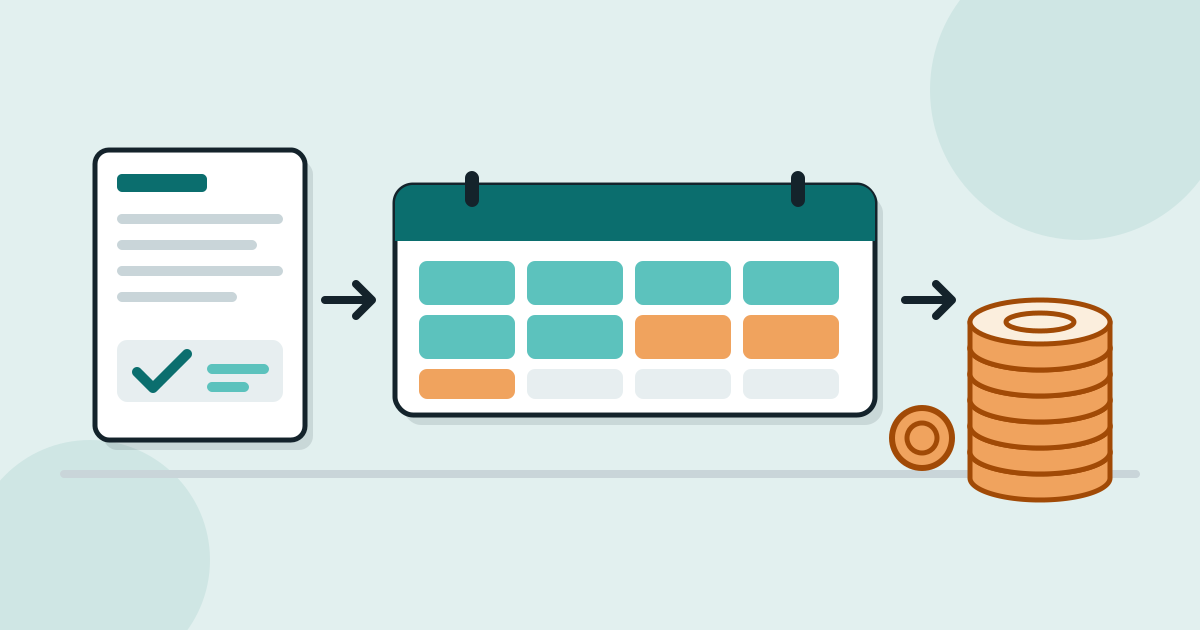
Short answer: For a cleaning contract with a city, county, school district or other local government in Florida, the bill is generally due 45 days after the government receives a proper invoice. Late interest is 1 percent per month, but it only starts 30 days after that due date, and you have to invoice for it. State agencies such as FDOT run on a different clock: they are expected to pay within about 40 days of receiving the invoice and approving the work. Plan your cash for 6 to 10 weeks, send clean invoices, and know who to call.
Here is the part nobody puts in the bid package: you will clean the building for a month, pay your crew every week, and then wait.
If you're new to government work, you probably spend your energy on the price, the insurance and the scope. Then the first contract starts, and the cash crunch can show up in week three, when payroll has gone out three times and the city hasn't paid anything yet. Nothing went wrong. That's just how public money moves.
The good news is that Florida has written rules about how long the government can take. If you know them, you can price for the wait, send invoices that start the clock, and push back politely when a payment runs late. This post walks through what the law says, how it plays out on the kinds of contracts we see around Gainesville, Ocala and Lake City, and a simple routine that keeps you paid.
This is general information based on the Florida Statutes, not legal advice. Your contract's own terms matter, so read them before you sign.
Two different clocks: local governments and state agencies
Florida runs two separate payment rules, and which one applies depends on who is writing your check.
Local governments fall under the Local Government Prompt Payment Act, which is Part VII of Chapter 218 of the Florida Statutes. The law defines a “local governmental entity” as a county or municipal government, school board, school district, authority, special taxing district or other political subdivision (s. 218.72). For us that means the county governments of Alachua, Marion, Columbia, Levy, Gilchrist, Bradford, Putnam and Union, the cities in them (Gainesville, Ocala, Lake City and the rest), and the school districts.
State agencies fall under a different statute, s. 215.422. A janitorial contract with a state agency such as the Florida Department of Transportation is paid under that law, not the local one. FDOT's District 2 office buys janitorial service for maintenance offices in our area, including the Chiefland complex we covered in our post on background checks for cleaning crews.
One gray area to check before you count on either rule: colleges, housing authorities and other special bodies. The local definition includes “authority” and “special taxing district,” but the text doesn't name housing authorities or state colleges. If you're bidding for one of them, ask the purchasing office which payment terms apply.
The local government rule: 45 days, then interest
For cleaning, which the law treats as a service and not construction, the rules work like this:
- The clock starts when a proper invoice is received. Under s. 218.73, the payment period runs from the date the entity receives a proper invoice. If the government never receives one, the period runs from the latest of the date it accepted delivery, the date the services were completed, the date a rental period begins, or a date the contract sets. Don't rely on that fallback. Send the invoice.
- The payment is due 45 days later. Under s. 218.74, for goods and services other than construction, the due date is 45 days after the date set in s. 218.73.
- Late payments earn interest, with a grace period. Interest is 1 percent per month on the unpaid balance, starting 30 days after the due date. You have to invoice the government for the interest to receive it. Any overdue period under a month counts as a month, and unpaid interest compounds monthly.
- The government has to stamp invoices as received. Each local entity must set up procedures to mark every payment request or invoice with the date its agent, employee or facility received it. That stamp is your proof of when the clock started, so ask for it, or keep your own proof of delivery.
What is a “proper invoice”? The law defines it as an invoice that conforms with all statutory requirements and with the receiving entity's own requirements, and those requirements must be written into the contract for the project. In plain English, the contract tells you what the invoice has to look like. Follow it exactly.
If your invoice isn't proper, the government can't just sit on it. Under s. 218.76, it has to notify you in writing within 10 days of receiving an improper invoice and tell you what to fix. If it does, fix it and resubmit right away. A missing PO number or a wrong contract number can cost you weeks.
The state agency rule: about 40 days
State agencies are paid under s. 215.422. The agency has 20 days after it receives the invoice and receives, inspects and approves the work to record the invoice and send it to the state's Chief Financial Officer. The Department of Financial Services then has 10 days to approve payment. Inspection and approval generally may not take more than 5 working days unless the contract says otherwise.
If no payment is issued within 40 days of receiving the invoice and approving the work, the agency owes interest on the undisputed balance. Disputed amounts are handled separately. The statute also creates a vendor ombudsman in the Department of Financial Services who helps vendors with late payments.
Two practical points for a state contract. First, you need to be set up as a state vendor with a W-9 on file, because the state says a delay caused solely by a missing W-9 is not interest-eligible. Second, if you can't find your payment, the state's own guidance is to contact the agency that pays you, and you can look up payments on the state vendor payment history search.
What the wait does to a small cleaning company
Here is an example, with numbers made up to show the shape of the problem. The sample digest on our homepage shows a recent City of Lake City award for janitorial service in four municipal buildings, with yearly bid amounts that add up to about $53,900 across the four buildings. Spread over twelve months, that's roughly $4,500 a month in billing.
Say you start January 1 and invoice at the end of the month. Under the 45-day rule, the money is due about mid-March, around six weeks after you send the invoice. By then you will have paid January and February payroll, plus supplies, and you're partway through March. If labor and supplies eat roughly two-thirds of what you bill (an example assumption, not a rule), you have fronted something like $6,000 or more of your own cash before the first payment lands.
| Example date | What happens |
|---|---|
| Jan 31 | You finish the month, and the city receives your proper invoice. The 45-day clock starts. |
| Mar 17 | 45 days later. Payment is due. |
| Apr 16 | 30 days after the due date. If the invoice is still unpaid, interest of 1 percent per month starts to build, and you have to invoice for it. |
That isn't a reason to skip government work. It's a reason to do three things:
- Price the wait. Use a cash-flow line, not just a margin line, when you build your number. Our post on pricing a government janitorial bid shows how to work from past winning prices. Add the cost of carrying payroll for two months.
- Line up a cushion before you bid. That might be a small business line of credit from your bank or a cash reserve for the first 60 to 90 days. Don't wait until the first contract starts to ask.
- Ask the buyer about invoicing up front. At the pre-bid meeting or in the question period, ask where invoices go, whether monthly invoices are required, and what the entity needs on them. Ask in writing during the bid period, if the solicitation allows questions, so the answer is on the record.
Send an invoice that starts the clock
The whole 45 days depends on a proper invoice, so treat invoicing like part of the job. A routine that works:
- Read the invoicing section of the contract before day one. Note the required fields: contract or PO number, service period, location, rates, any signed service log or inspection form.
- Invoice on a fixed day every month, as soon as the service period closes. Don't wait until you have time.
- Send it where the contract says, by the method it says, and keep proof of delivery. If the entity stamps invoices as received, ask for the date.
- Put the invoice date and the 45-day due date on your own calendar and follow up politely a week before it is due.
- If you get a written notice that an invoice is improper, fix exactly what it names and resubmit the same day. The government has to send that notice within 10 days under s. 218.76, so silence for three weeks is a reason to call.
- If interest is owed, invoice for it as a separate line. The statute says you have to ask.
When a payment runs late
Start with the person who handles accounts payable, not the person who manages the building. A friendly email with the invoice number, the date it was received and the date it was due is the right first step. Often the cause is something simple, like a missing approval or an invoice sitting in the wrong inbox.
If a local government disputes your invoice, s. 218.76 requires it to use its own dispute process, which must begin within 30 days of receiving the invoice and reach a final decision within 45 days. If you ultimately win, interest runs from the original due date. In a court action over amounts due, the judge must award costs and reasonable attorney's fees to the winning side, which cuts both ways, so talk to a lawyer before you go that far.
For a state agency, start with the paying agency, then the vendor ombudsman at the Department of Financial Services.
A last point on tone: you'll bid on this agency again. Be persistent and polite, and keep every email.
Frequently asked questions
How long does a Florida city or county have to pay a cleaning contractor?
For services other than construction, a local government's payment is due 45 days after the date set by s. 218.73, which is normally the date it receives a proper invoice. Your contract may set its own terms, so read the payment section before you sign.
Do local governments owe interest if they pay late?
Yes. Under s. 218.74, late payments bear interest at 1 percent per month on the unpaid balance, starting 30 days after the due date. You have to invoice the government for the interest to be paid it, and unpaid interest compounds monthly.
What is a proper invoice in Florida?
It is an invoice that meets all statutory requirements and the receiving entity's own requirements, which must be written into the contract. The contract is your checklist, so match it field for field.
What if the city says my invoice is wrong?
A local government has to tell you in writing within 10 days of receiving an improper invoice and say what you need to correct (s. 218.76). Correct it and resubmit. Follow the entity's dispute process if you disagree.
Does the same 45-day rule apply to school districts?
The Local Government Prompt Payment Act defines a local governmental entity to include school boards and school districts, so it is written to cover them. Ask the district's purchasing office how invoices are submitted and how often they are paid.
How long does the State of Florida take to pay vendors?
Under s. 215.422, a state agency has 20 days to record and approve an invoice and send it to the Chief Financial Officer, who has 10 days to approve payment. If no payment issues within 40 days of the invoice and approval of the work, interest is owed on undisputed amounts.
Who do I call if a state agency pays late?
Start with the agency that pays you. The state also has a vendor ombudsman in the Department of Financial Services to help vendors with late payments, and a public payment history search to check whether a payment was issued.
How much cash does a small cleaning company need for a government contract?
Plan on carrying payroll and supplies for roughly two to three months before payments become regular, and a little more if the contract bills quarterly. Run your own numbers. A monthly invoice due 45 days after you send it means the first check arrives about two and a half months after you start.
Set up the payment side before you bid
Winning the bid is only half of it. Getting paid on time is the other half, and it's mostly paperwork and planning. Know which clock applies, read the invoicing section of the contract, line up a cash cushion, and invoice on the same day every month.
The weekly Rebid Ready digest gives you the open and upcoming public cleaning bids across Alachua, Marion, Columbia, Levy, Gilchrist, Bradford, Putnam and Union counties, so you can plan the contracts and the cash that goes with them. The trial is free for two weeks with no card, and then it's $29 a month as a founding member.
Try Rebid Ready free for two weeks and see the cleaning bids coming up in Gainesville, Ocala and the rest of North Central Florida, with the requirements in plain English. No credit card needed. After the trial, founding members pay $29 a month.
Start my free trial— Jeff, founder of Rebid Ready
This post is general information, not legal or financial advice. Prices and bid details come from public records, so always confirm them in the official solicitation and your own contract.
Get new articles by email
One email each time I publish a new article. Just the articles, not the bid digest. Unsubscribe anytime.
Related: How to Price a Government Janitorial Bid Using Public Bid Results
Background Checks for Cleaning Crews on Florida Public Contracts: What You Have to Prove Before You Bid
← More articles on the Rebid Ready blog
See what's in the Rebid Ready weekly digest
Sources
- Florida Statutes s. 218.70, Local Government Prompt Payment Act: the popular name of the law.
- Florida Statutes s. 218.72, Definitions: who counts as a local governmental entity, and the definitions of proper invoice and vendor.
- Florida Statutes s. 218.73, Payment of local government bills for purchases other than construction: the invoice-receipt trigger and the fallback dates.
- Florida Statutes s. 218.74, Procedures for calculation of payment due dates: the received stamp, the 45-day due date, and 1 percent monthly interest starting 30 days after the due date.
- Florida Statutes s. 218.76, Improper payment request or invoice; resolution of disputes: the 10-day written notice, the 30-day and 45-day dispute timing, and attorney's fees.
- Florida Statutes s. 215.422, State agency payment time limits: the 20-day, 10-day and 40-day state timelines, interest on undisputed amounts, and the vendor ombudsman.
- Florida Department of Financial Services, Vendors page: the vendor payment history search, the W-9 note, and the advice to contact the paying agency.
- Rebid Ready homepage sample digest: the City of Lake City award amounts used in the example.